What to Expect During an Angiogram
An angiogram is a specialised imaging procedure used to examine blood vessels and identify areas where blood flow may be narrowed or blocked. A coronary angiogram, also called coronary angiography, specifically examines the arteries that supply blood to the heart.
Your cardiologist may recommend a coronary angiogram when symptoms, ECG findings, stress testing or other investigations suggest that there may be a problem with blood flow to the heart. Understanding what happens before, during and after the procedure can help you feel more prepared.
At DHEE Hospitals Cardiology, coronary angiography is performed as part of the evaluation and management of patients with suspected or known coronary artery disease.
What Is a Coronary Angiogram?
A coronary angiogram uses X-ray imaging and a contrast dye to produce detailed images of the coronary arteries. These arteries supply oxygen-rich blood to the heart muscle.
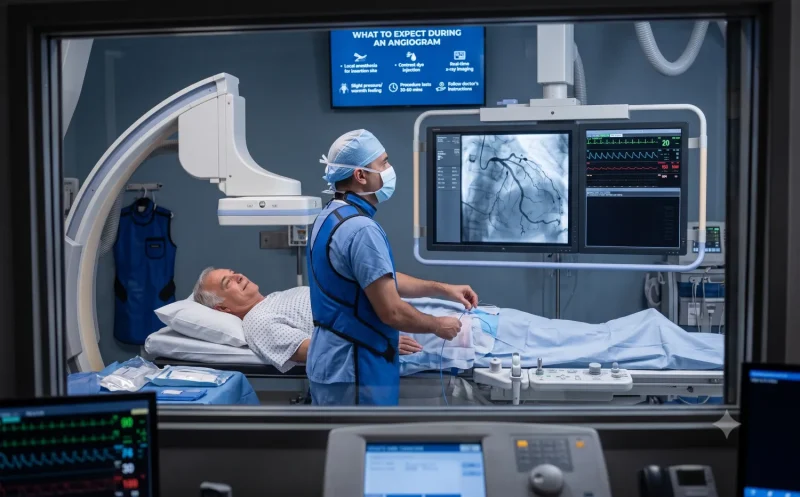
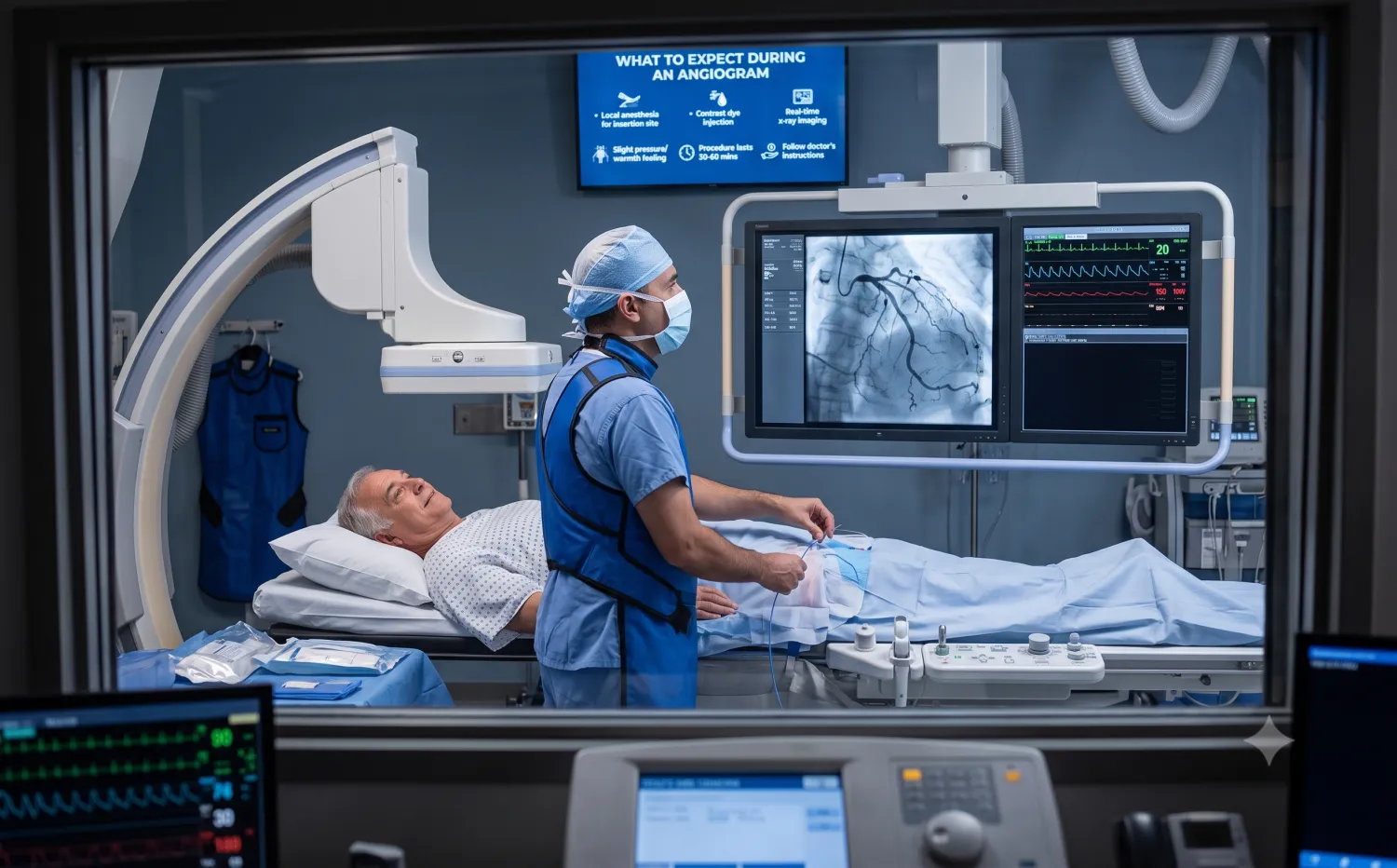
During the procedure, a thin flexible tube called a catheter is guided through a blood vessel to the heart. Contrast material is then introduced through the catheter while X-ray images are taken. This allows the cardiologist to assess the blood flow through the coronary arteries and identify significant narrowing or blockages.
Why Is an Angiogram Recommended?
A coronary angiogram may be recommended when your cardiologist needs more detailed information about the coronary arteries. Possible reasons include:
- Chest pain or suspected angina
- Symptoms suggesting reduced blood flow to the heart
- Abnormal ECG or other cardiac test results
- Suspected or known coronary artery disease
- Evaluation following a heart attack
- Assessment before certain heart procedures or surgery
- Evaluation of previously treated coronary arteries in selected patients
The decision to perform an angiogram depends on your symptoms, medical history, examination and other test results.
What Happens Before an Angiogram?
Before the procedure, your cardiology team will review your medical history, current medications, allergies and previous test results. You may undergo blood tests and other investigations depending on your condition.
Tell your doctor if you:
- Have had an allergic reaction to contrast material in the past
- Have kidney disease
- Have diabetes
- Take blood-thinning or other regular medications
- Could be pregnant
- Have any other significant medical conditions
Your healthcare team will provide specific instructions regarding food, fluids and medications before the procedure. Follow these instructions carefully.
Will You Be Awake During an Angiogram?
In most cases, you remain awake during a coronary angiogram. Local anaesthesia is used to numb the area where the catheter is inserted. Medication may also be given to help you relax if required.
You may be able to communicate with the medical team throughout the procedure. Your heart rate, blood pressure and oxygen levels are monitored during the procedure.
Where Is the Catheter Inserted?
The catheter can be introduced through an artery in the wrist or groin, depending on your individual circumstances and the approach selected by your cardiologist.
The insertion site is cleaned and numbed with local anaesthetic. The catheter is then carefully guided through the blood vessel towards the heart using X-ray guidance.
What Happens During the Angiogram?
Once the catheter reaches the appropriate position, contrast material is injected into the coronary arteries. X-ray images are taken as the contrast moves through the blood vessels.
You may experience a brief sensation of warmth or flushing when the contrast material is injected. Some people may notice a temporary unusual taste or mild discomfort. These sensations generally pass quickly.
The cardiologist examines the images to assess the coronary arteries and determine whether there are areas of significant narrowing or blockage.
How Long Does a Coronary Angiogram Take?
The procedure time can vary depending on the complexity of the examination and the patient’s individual circumstances. A straightforward diagnostic angiogram may be completed relatively quickly, while additional procedures or complex findings may require more time.
Your healthcare team can provide a more specific estimate based on your planned procedure.
What Happens If a Blockage Is Found?
An angiogram can identify narrowing or blockages in the coronary arteries. Depending on the findings, your cardiologist may recommend medication, lifestyle management, further evaluation or an appropriate procedure.
In selected situations, angioplasty and stent placement may be performed to improve blood flow through a significantly narrowed coronary artery. Whether treatment is performed during the same session depends on the clinical situation, the angiogram findings and the treatment plan.
What Is Angioplasty and Stenting?
Angioplasty is a procedure used to widen a narrowed coronary artery. A small balloon may be inflated at the site of the narrowing, and a stent may be placed to help keep the artery open.
Not every blockage requires a stent. The appropriate treatment depends on factors such as the location and severity of the narrowing, symptoms, overall heart health and other clinical findings.
What Happens After an Angiogram?
After the procedure, you will be monitored for a period of time. The catheter is removed and pressure or another closure method may be used at the insertion site to prevent bleeding.
If the catheter was inserted through the wrist, recovery may be different from an approach through the groin. Your healthcare team will provide specific instructions regarding movement, wound care, medications and activity.
Can You Go Home the Same Day?
Some patients undergoing an uncomplicated diagnostic angiogram may be able to go home on the same day, while others may need to remain in the hospital for observation or further treatment.
The length of stay depends on the reason for the angiogram, the findings, whether another procedure was performed and your overall health.
What Can You Expect at the Angiogram Site?
Mild soreness, bruising or tenderness around the catheter insertion site can occur after the procedure. Your healthcare team will explain how to care for the site and what signs of complications to watch for.
Seek medical attention if you develop significant bleeding, increasing swelling, severe pain, changes in colour or temperature of the affected limb, fever or other concerning symptoms.
Are There Risks Associated With an Angiogram?
Coronary angiography is generally considered a well-established cardiac procedure, but like any invasive procedure, it has potential risks. These can include:
- Bleeding or bruising at the catheter insertion site
- Blood vessel injury
- Reaction to the contrast material
- Kidney-related complications in susceptible patients
- Abnormal heart rhythm
- Infection
- Blood clots or other vascular complications
- Rarely, more serious cardiovascular complications
Your cardiologist will assess your individual risk factors and explain the benefits and potential risks before the procedure.
Is an Angiogram Painful?
Most patients do not experience significant pain during a coronary angiogram. Local anaesthetic is used at the catheter insertion site. You may feel pressure when the catheter is inserted or moved, but the catheter itself generally does not cause significant pain.
A brief warm or flushing sensation may occur when contrast material is injected.
What Should You Do After an Angiogram?
Your cardiologist will provide specific post-procedure instructions. Depending on the procedure and catheter access site, you may be advised to:
- Keep the catheter insertion site clean and dry as instructed.
- Avoid strenuous activity for the recommended period.
- Drink fluids if advised, particularly to help the body clear the contrast material.
- Take prescribed medications according to instructions.
- Monitor the insertion site for bleeding, swelling or other changes.
Do not resume or stop medications unless your healthcare team has advised you to do so.
When Should You Seek Medical Attention After an Angiogram?
Contact your healthcare team or seek urgent medical attention if you experience significant or persistent bleeding from the catheter site, severe swelling, severe chest pain, difficulty breathing, fainting, sudden weakness or other serious symptoms after the procedure.
Angiogram vs Angioplasty: What Is the Difference?
An angiogram is primarily a diagnostic imaging procedure used to examine blood vessels and identify narrowing or blockages. Angioplasty is a treatment procedure used to improve blood flow through a narrowed coronary artery.
An angiogram may be performed without angioplasty. In some situations, however, angioplasty and stenting may be considered based on the angiogram findings and the patient’s clinical condition.
Why Is Follow-Up Important After an Angiogram?
The angiogram provides important information about the condition of your coronary arteries, but treatment does not necessarily end with the procedure. Your cardiologist may recommend medications, lifestyle changes, additional investigations or an interventional procedure depending on the findings.
Following your treatment plan and managing cardiovascular risk factors such as high blood pressure, diabetes, high cholesterol and tobacco use can be important for long-term heart health.
Frequently Asked Questions About Coronary Angiograms
Is a coronary angiogram a surgery?
A coronary angiogram is an invasive cardiac procedure, but it is not the same as open-heart surgery. A thin catheter is inserted through a blood vessel and guided to the heart to obtain images of the coronary arteries.
Can I eat before an angiogram?
Your healthcare team will provide specific instructions about eating and drinking before the procedure. Follow the instructions given to you, as preparation requirements can vary depending on your procedure and medical condition.
Will I feel the contrast dye?
You may briefly experience a warm or flushing sensation when the contrast material is injected. This usually passes quickly.
Does an angiogram always mean I need a stent?
No. An angiogram is used to evaluate the coronary arteries. If a blockage is identified, treatment depends on its severity, location, symptoms and other clinical factors. Medication, lifestyle management, further testing, angioplasty or other treatment may be considered.
How soon can I return to normal activities after an angiogram?
Recovery varies depending on the catheter access site, the type of procedure performed and your overall health. Your cardiologist will provide individual instructions about driving, work, exercise and other activities.
Coronary Angiography at DHEE Hospitals Cardiology
DHEE Hospitals Cardiology provides evaluation and treatment for patients with suspected or known coronary artery disease. If your doctor recommends a coronary angiogram, understanding the procedure and following the preparation and recovery instructions can help you approach the examination with greater confidence.
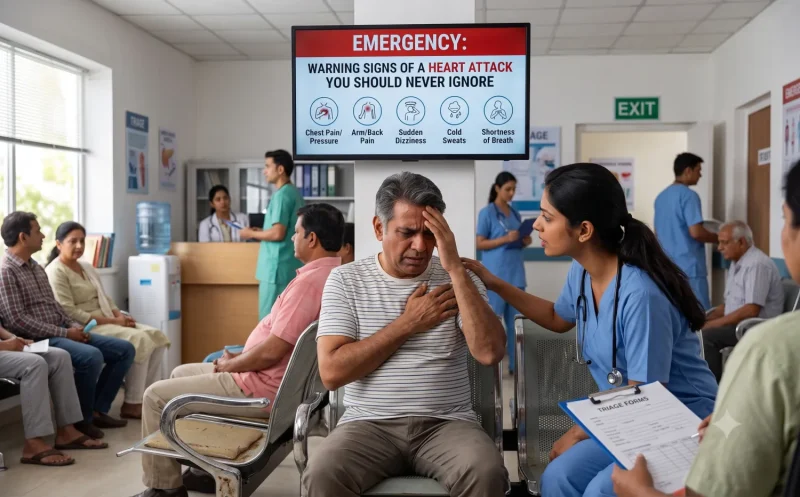
If you have persistent or new chest pain, breathlessness or other symptoms that may indicate a heart problem, seek medical evaluation promptly. In the case of severe or sudden symptoms suggestive of a heart attack, seek emergency medical care immediately.